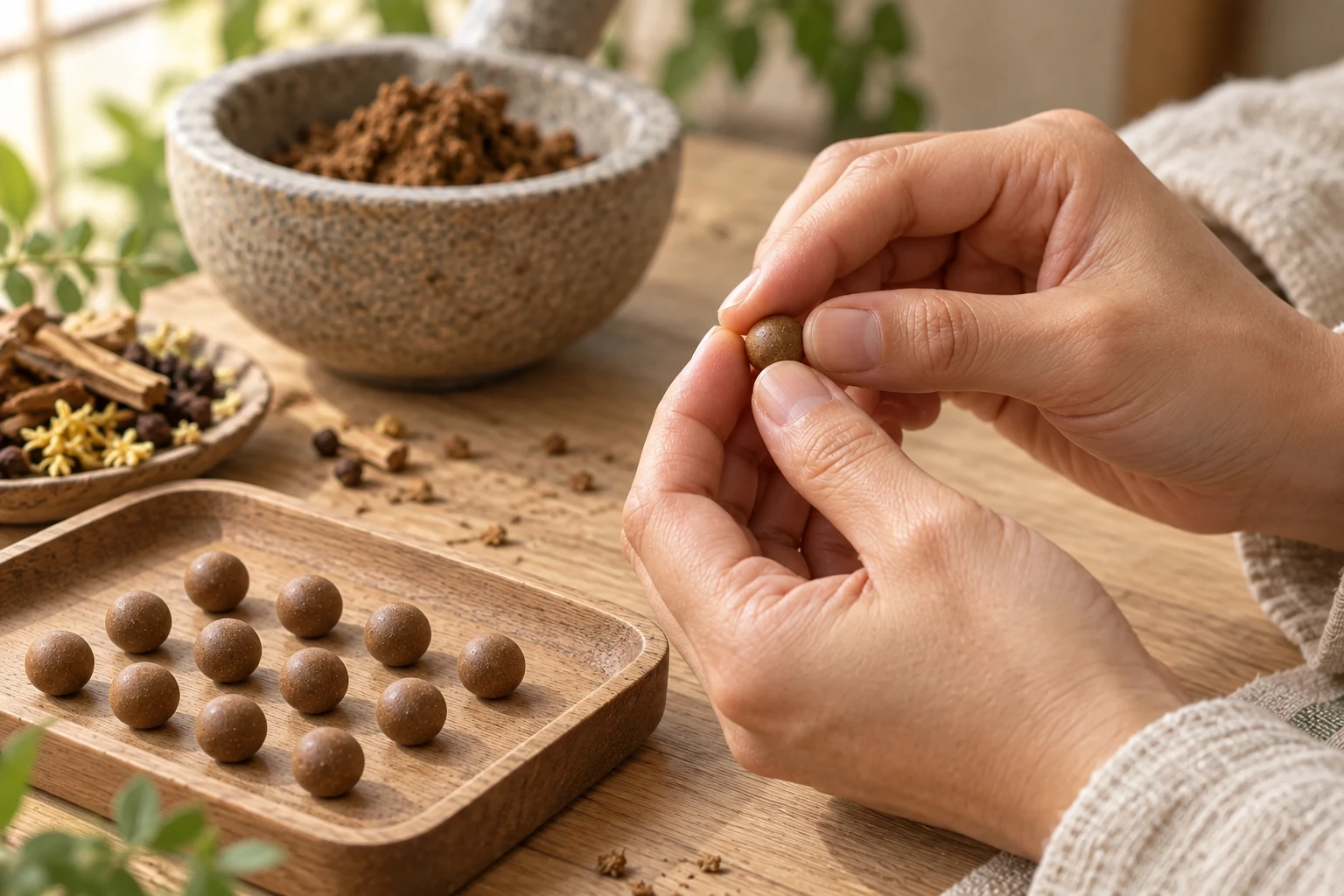
A finished bracelet presents a simple rhythm: bead, bead, bead, gathered into a circle. The work behind that rhythm is less uniform. A blend needs to be considered, a mixture needs to be workable and each small form needs care before it becomes part of something wearable.
Our handcraft story begins with Chinese botanical ingredients and a team that develops and refines the blends. This is an overview of that process, rather than a recipe. Exact proportions, binders and production timings are specific to the formula and are not published in the product catalogue.
Begin with the character of the blend
A formula brings several materials into conversation. Herbal Reverie lists ya bai aromatic wood, atractylodes, huo xiang, benzoin, Chinese angelica and clove. Mountain Ginseng uses white sandalwood, polygala, poria, benzoin and ginseng. Each list gives the team a different starting point for texture and aromatic character.
Developing a blend means making samples, considering the result and adjusting the composition. A traditional ingredient name does not, by itself, establish a finished bracelet’s performance or quality. The finished object still needs to be assessed on its own terms.
Prepare a mixture that can be shaped
Botanical materials are prepared and ground before being brought together into a workable mixture. The useful texture is one that can hold a small shape while allowing the maker to refine its surface. This stage connects the composition of the blend to the physical demands of a wearable bead.
We do not describe the bracelets as binder-free, coating-free or made to a particular ingredient percentage unless that detail has been confirmed. Hand shaping explains a process; it does not supply information that is missing from a formula.
Form one bead at a time
The maker rolls and shapes the mixture between the fingertips, paying attention to the outline and surface of each bead. Repetition builds a strand, but no single photograph can convey every movement involved. The illustrations accompanying this article show the character of the handwork rather than documenting an individual production batch.
A slight variation in tone or texture can give a hand-formed piece its warmth. That should be distinguished from a damaged bead, a sharp edge or a loose component. Thoughtful handwork is about care, not an excuse for an uncomfortable finish.
Allow time for drying, finishing and fit
Formed beads are set aside to dry before finishing and stringing. We do not give a single drying time for every blend: the catalogue does not specify one. Once a bracelet is assembled, bead size, inner circumference and the final arrangement determine how it feels on the wrist.
When you choose a piece, ask for the actual dimensions and any blend-specific care advice. If you use the DIY Studio, treat the design as a way to explore colours and arrangements; available materials and the final fit still need confirmation before making.
What the handwork adds
The appeal is in the attention given to an everyday object: the particular blend, the small rounded forms and the way they come together. Knowing how a bracelet is made can change what you notice when you wear it. Texture becomes something to look at closely, and a familiar circle begins to tell a more detailed story.